
Keeping Children Safe: IDP Foundation’s commitment to child safeguarding for ALL children, now
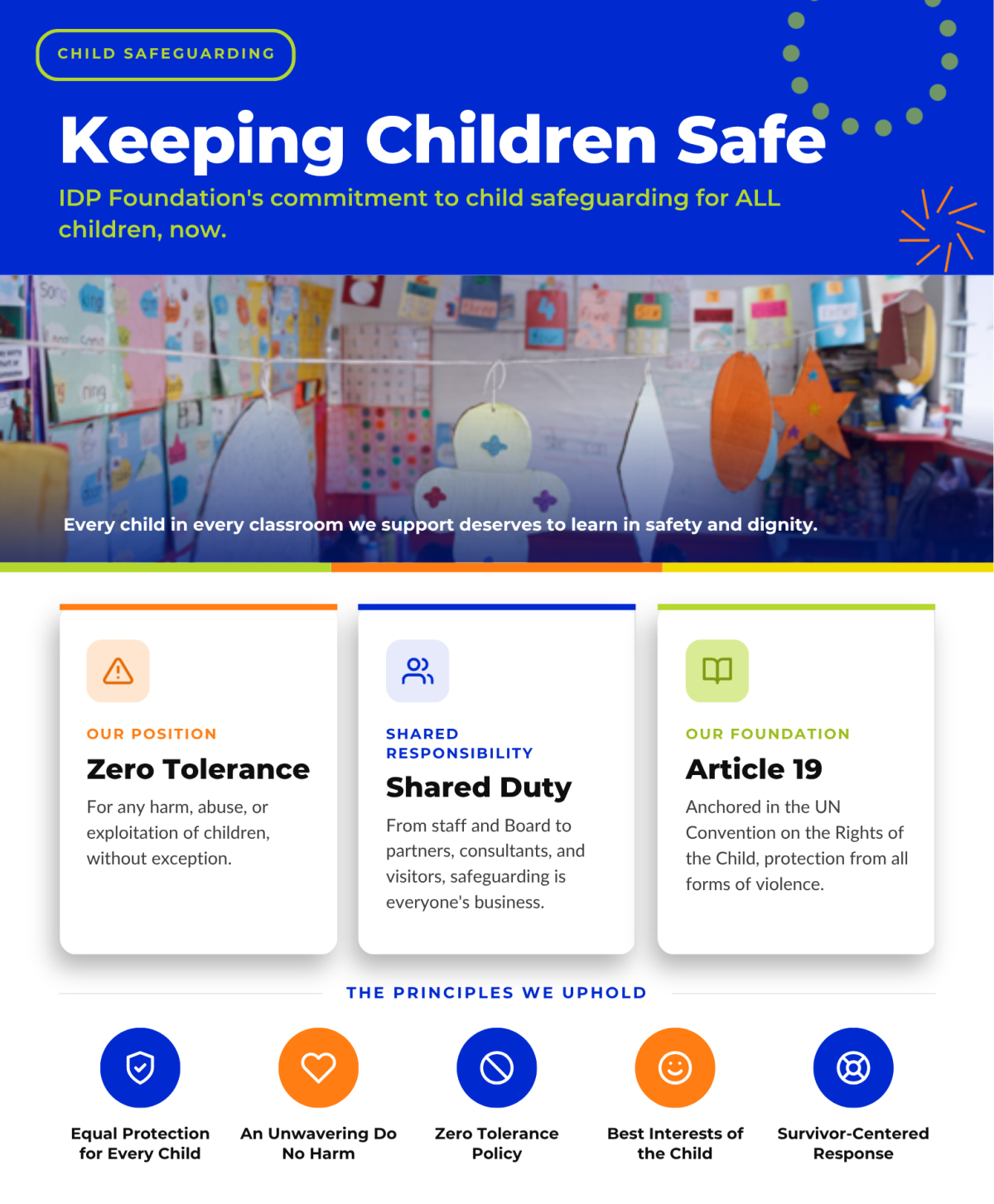


At the IDP Foundation (IDPF), we believe that every child has the right to learn, to grow, and to thrive in safety. Guided by our vision of a world in which everyone has an equal right to learn, that belief is the standard against which we hold our work, our grantees, our partners, and ourselves accountable. Our Child Safeguarding Policy sets out how this commitment translates into everyday practice across the Foundation and the partnerships we support.
Our position
IDPF takes a zero-tolerance approach to any form of harm, abuse, or exploitation of children. As a grant-making foundation and a funder in the education ecosystem, our work brings us both directly and indirectly into the lives of children, families, and the communities around them. With that reach comes responsibility. Safeguarding is a shared obligation of everyone who acts on behalf of the IDPF; from our staff and governing Board to our implementing partners, consultants, and visitors.
Our guiding principles
Our policy is anchored in Article 19 of the United Nations Convention on the Rights of the Child, which affirms every child’s right to protection from all forms of violence. From that foundation, we have built seven principles that shape how we operate:
- Equal protection for every child, regardless of background
- Zero tolerance for any breach of our standards
- The conviction that safeguarding is everyone’s business
- An unwavering commitment to Do No Harm
- Prioritization of the best interests of the child
- A survivor-centered response when harm does occur
- A duty to act on every concern raised
Putting it into practice
Partners must either meet IDPF’s safeguarding standards or adopt and implement our Policy across their programs, including with sub-grantees. Every partner appoints a Child Safeguarding designated person to coordinate implementation and serve as the first point of contact for concerns, completes a safeguarding self-assessment during the application process, and receives a briefing at the start of each grant period. Reporting on safeguarding is built into our regular grant monitoring.
Internally, every IDPF staff member completes safeguarding induction and training, signs the Policy, and undergoes a background check before joining. The Policy is reviewed and updated every three years, and all updates are reviewed with staff. Our media and communications work is governed by clear rules on dignity, consent, privacy, and accuracy. Children in our materials are never portrayed as passive victims, appear only with informed consent, and are never identified in ways that could put them at risk.
Reporting a concern
Anyone with a safeguarding concern can raise it directly with IDPF’s Child Safeguarding Focal Person. Every report is received with care, handled in confidence, and, where appropriate, referred to professionals who can support the child and their family.
Our Child Safeguarding Policy outlines the standards we hold ourselves to and the commitments we make to protect children. Safeguarding is an everyday practice and a responsibility we all share. We invite our partners and the wider public to read our full Child Safeguarding Policy.