
Re-imagining Education Philanthropy in a Changing Global Order: Reflections from the International Education Funders Group Annual Meeting
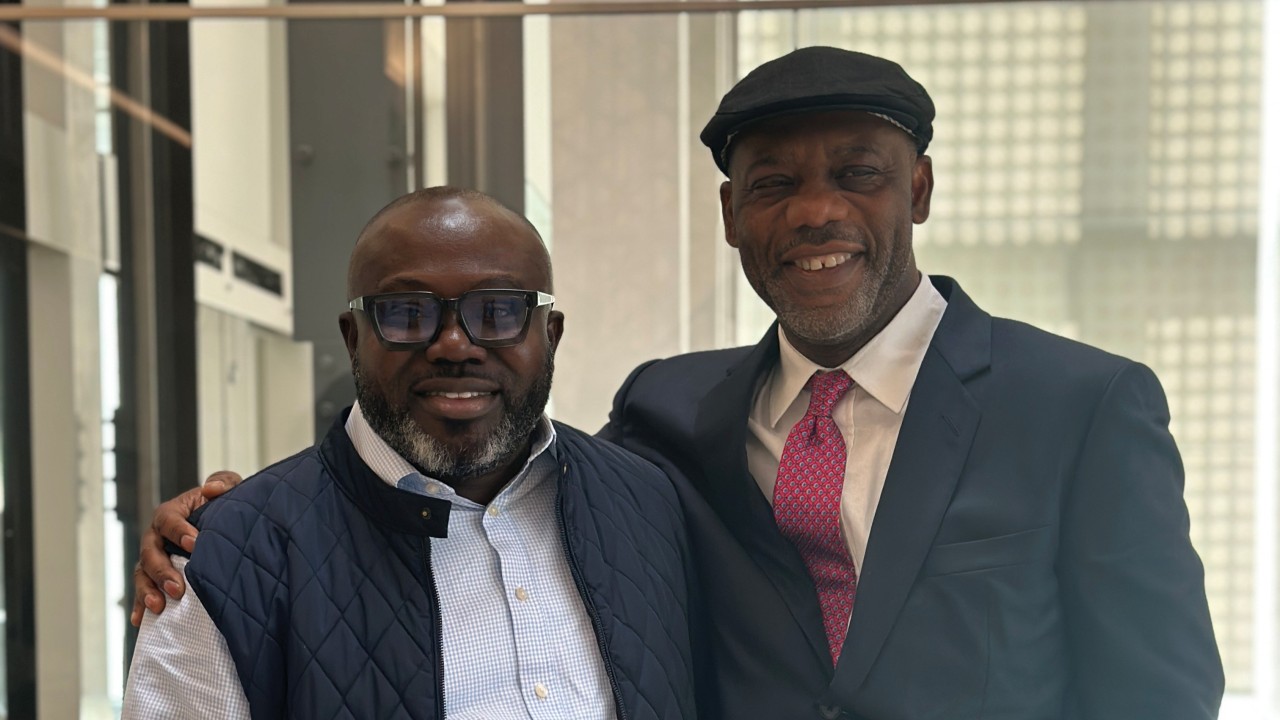

April 26-29, 2026. London, UK.
Over three days, the International Education Funders Group (IEFG) brought together representatives of foundations, policymakers, researchers, journalists, technologists, and young people to reflect on the future of education, development, and philanthropy in an increasingly uncertain world. Originally planned for Jordan, it had to be moved to London at short notice, a reminder that the instability shaping our work does not stay politely in the background. The central question was, in essence, what it means to fund education in a world that is changing faster than most of our institutions can keep up with. I am happy with the honesty and openness to reality and some insights that will keep us thinking about how to be better in our work.
One of the most honest moments came early, when we agreed to what many in the room already knew but rarely say out loud: the narrative that African education systems survive mainly because of international donor funding is simply not accurate. This is because, across the continent, African governments are already funding the vast majority of their education systems, including salaries of teaching and non-teaching staff, school infrastructure, and all relevant government departments. External financing has played a role, sometimes a meaningful one, but it has rarely been the foundation. The foundation is domestic investment, political will, and the millions of teachers, families, and local leaders who show up every single day.
This matters because as international aid shrinks, the instinct in global philanthropy circles can be framing this as a crisis of abandonment. The reality rather is that these systems were never primarily ours to abandon.
The real question is different. As governments face harder fiscal choices, growing youth populations, and rising pressure to deliver quality education with less external support, how do we as funders stand with them and support their development agenda rather than coming in with our own agenda?
Ghana: A Case Study Worth Learning From
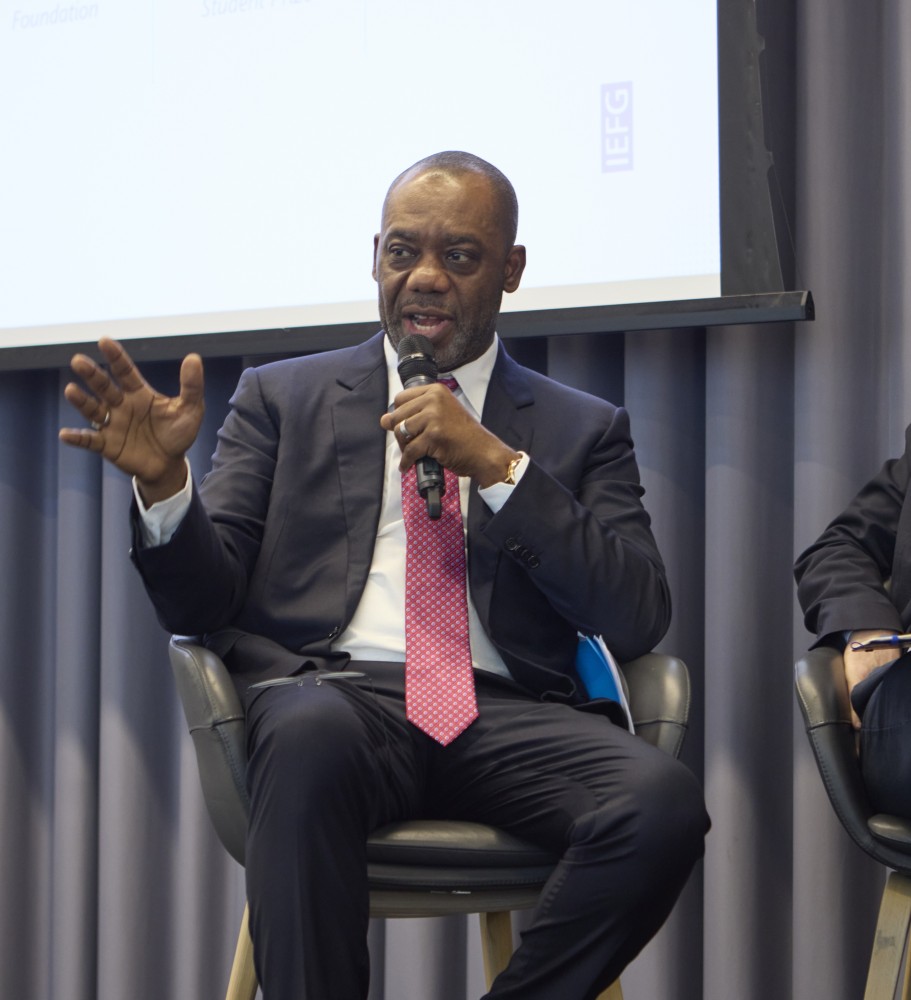
Dr. Matthew Opoku Prempeh, a former Minister of Education of Ghana, spoke about Ghana’s Free Senior High School reform. In 2017, the country took a bold nationally owned decision to redirect significant oil revenues toward making secondary education accessible to every Ghanaian child. This was executed without donor intervention both at the design and funding stage. The government decided it mattered, made it a political priority, built it and has been sustained till date. Enrolment data shows that six years before the program, average annual enrollment was 260,490 students. Six years after witnessed a rise to 422,940. A difference of more than 160,000 young people per year, driven by a government that chose to act. These are some of the examples from the continent that gets underreported.
Governments make decisions about what scales and sustain reforms when project funding runs out. They carry the weight of political transition and institutional continuity. Philanthropy, at its best, can catalyse and support but cannot do any of that for them.
Re-imagining the Role of Philanthropy: Where It Has Fallen Short and Where It Can Do Better
There was an honest introspection about how philanthropy has sometimes made things harder rather than easier. The patterns many organizations describe are familiar: designing solutions at a distance and expecting government and communities to absorb them, externally designed pilots, short project cycles, systems built around donors rather than governments, and a focus on proving models rather than changing systems. The next era of philanthropy requires a different posture.
First, philanthropy must recognize and respect government agency. African governments are not empty vessels waiting for solutions. They are political institutions balancing competing pressures, public expectations, limited fiscal space, and national priorities. Effective philanthropy must engage governments as partners, not implementers of externally designed ideas.
Second, philanthropy must shift from parallel delivery toward embedded partnership. Real change requires working inside systems, supporting leadership capacity, strengthening institutions, and co-creating reforms that governments can sustain politically and financially over time.
Third, philanthropy must rethink its relationship with risk. As traditional aid declines, there is growing need for catalytic capital, blended finance, guarantees, and new mechanisms that crowd private capital into education and child-focused sectors. Philanthropy is uniquely positioned to absorb risk in ways governments and commercial investors often cannot.
But financial innovation alone is not enough. The discussion repeatedly returned to the importance of politics, trust, and long-term commitment.
How Philanthropy Can Work Effectively with Governments
One of the strongest practical themes in the following days was a discussion focused on how philanthropy and development actors should work with governments. A handful of principles were suggested after our collective reflection.
- Lead With Curiosity. External actors must listen more than they speak. Too often organizations arrive with solutions before understanding political and institutional realities.
- Start With Government from the Beginning. Sustainable reform cannot be built through parallel systems or short-term “build and transfer” approaches. Governments must remain central from the start.
- Co-Create Solutions. Development actors should work with governments to define problems and shape solutions together. Local context matters. Political realities matter.
- Understand Politics. Education reform is never purely technical. Political incentives, leadership transitions, and fiscal trade-offs shape what becomes possible.
- Commit for the Long Term. Deep institutional change often requires engagement over seven to ten years, not short project cycles.
- Build Trust Continuously. Relationships and credibility matter as much as technical expertise. Trust determines whether reforms survive political transitions and institutional turnover.
To accompany these recommended principles, the group also had candid reflection and challenged several harmful assumptions that hinder and often made true partnership with government jaundiced:
- Governments Are Not Incapable of Leadership. A partnership premised on an assumption that government partners are incapable of leading fails at the outset. Effective leadership does exist within government; however, it would only be better appreciated and enhanced if there is a better understanding of the economic and political contexts within which they operate.
- Data Alone Does Not Create Reform. Despite the critical role data plays in transforming education systems, it often appears to be promoted as largely the key to reforming education systems, often crowding out the varied multi-dimensional factors that need to be considered. Data indeed contributes to education system reforms, but it does not create reform by itself.
- Proving a model is not the same as changing a system. Philanthropy has been quite successful in proving that models work, and despite the value this represents, it is very critical to note that proving a model is not the same as reforming a system. System reforms are more complex, messy and take a long time to achieve.
What I’m Sitting With
I left London thinking about partnership differently. The world is entering a more uncertain period: public resources are constrained, economic growth is not generating enough jobs, and aid is receding. This moment calls for a reset in how we imagine education partnerships.
What stayed with me is that African governments are not waiting to be rescued. They already carry most of the financial weight of their education systems, and as aid recedes, they will face even harder fiscal and political choices to sustain and improve outcomes. So the question we should be asking is not what we would do in their place. It is simpler and more honest: How can we support your efforts?
That reframing changes everything about philanthropy’s role. The challenge is not to replace governments, and not to bypass them, but to become a genuine catalytic partner. One that supports institutional capacity, mobilizes new forms of capital, strengthens leadership, and helps governments navigate a more complex world. The future of education reform will depend less on isolated projects and more on alignment between governments, philanthropy, private capital, technology, and local leadership.
That work is slower. It is political. It requires humility. But it is where lasting change happens.