
Small grants, big impact

All hands on deck to unlock and improve collaboration in education systems
Last year, Global Schools Forum and IDP Foundation, Inc. had the exciting opportunity to test how small grants could empower grassroots organisations to drive collaboration in education systems. Through the All Hands on Deck (AHOD) for SDG4 Small Grants Programme, we piloted a new approach: supporting local organisations to use the All Hands on Deck for SDG4 Action Toolkit with small but strategic grants to strengthen collaboration among education stakeholders and in their communities.
The first cohort has just wrapped up, made up of nine organisations across Cameroon, Ghana, Nigeria, Pakistan, Sierra Leone, and Tanzania. Each grantee received a USD $1,000 grant to use the toolkit for facilitating workshops, convening diverse stakeholders, and exploring how collaboration can make education systems more inclusive, coordinated, and effective.
The grantees:
- Black Girl’s Dream Initiative (Nigeria),
- Climate Class Connection (Pakistan),
- DEAN INITIATIVE (Nigeria),
- EducAid Sierra Leone ,
- GLOWA (Cameroon),
- SEED Care & Support Foundation (Nigeria),
- Tanzania Early Childhood Education and Care (TECEC) ,
- Teach Me Well Ghana , and
- Think Education(Ghana)
Represent a rich diversity of approaches and contexts. From supporting early childhood educators in Tanzania, to activating grassroots climate educators in Pakistan, and strengthening school networks in Sierra Leone. Each organisation used the toolkit in creative, locally relevant ways to bring people together around shared education goals.
We received 40 applications for this first round of small grants, a number that far exceeded our expectations and demonstrated a clear appetite for collaboration among grassroots actors. The enthusiasm reaffirmed that local organisations are ready and eager to convene, coordinate, and co-create solutions that make their education systems stronger.
You don’t have to write a big check to make a big difference
One of the strongest insights from this pilot is that impact doesn’t always correlate with cheque size. Small grants, when designed intentionally and paired with the right tools, can make a big difference.
In many cases, our grantees used their funds to cover modest but essential costs: facilitators, workshops, stakeholder dialogues, or materials to introduce the toolkit in community meetings. What emerged from these efforts wasn’t a single large-scale project, but rather a network of local actions that built momentum, trust, and shared purpose.
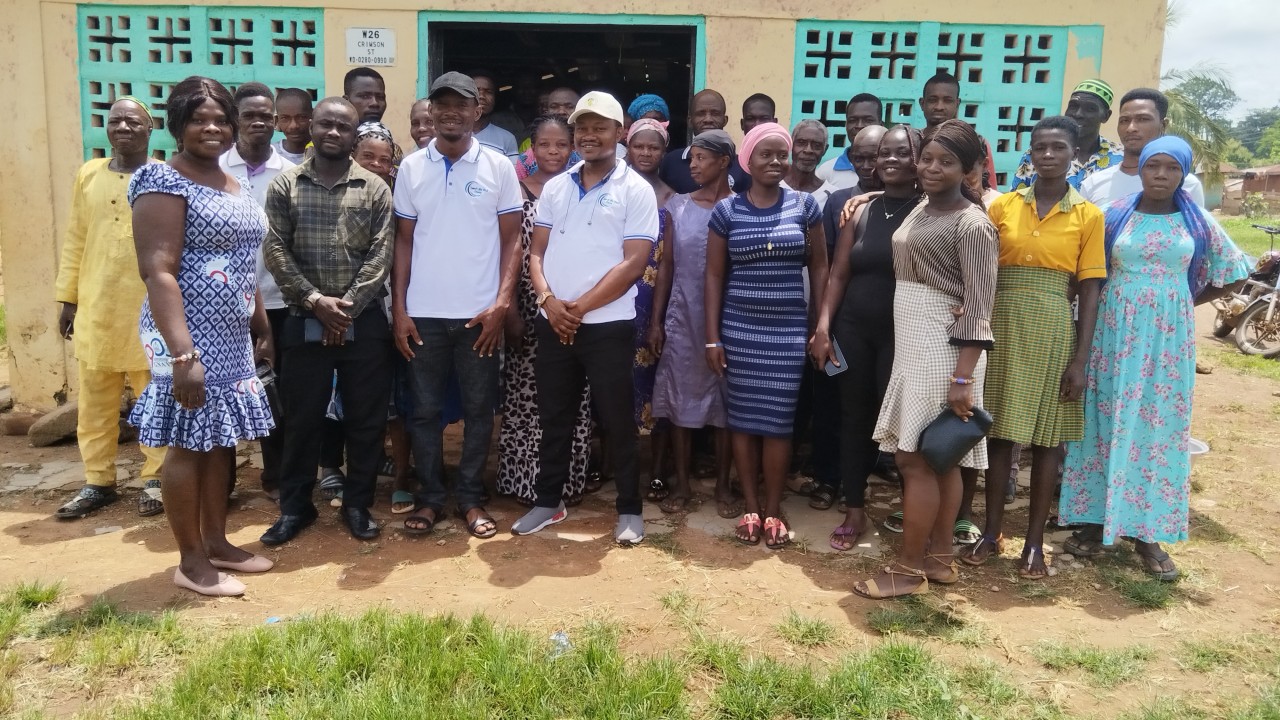
In Nigeria, Black Girls Dream Initiative convened vital multi-stakeholder dialogue in Ibadan, focused on tackling the critical issue of out-of-school girls in Oyo State, which faces the highest such rate in South-West Nigeria. The event brought together 15 participants from both community and government education systems to foster grassroots collaboration, build a shared understanding of key barriers like poverty and early marriage, and strengthen strategic local partnerships. By adapting the Action Toolkit, attendees successfully co-developed community-rooted strategies for the reintegration and retention of girls, reinforcing the broader mandate to advance inclusive education systems through local engagement.
In Sierra Leone, EducAid used the grant to hold several workshops to engage non-state actors to participate in efforts focused on addressing poor attendance of teachers and students in Port Loko. These brought together Community School Leaders and 13 Paramount Chiefs, helping to bridge the gap between community-led structures and the formal education system. They also hosted a community radio discussion on community-wide awareness and dialogue around the shared education challenge of poor school attendance. They have also now established a WhatsApp group with Paramount Chiefs, Ministry of Basic and Senior Secondary Education officials, civil society actors, and other key education stakeholders to communicate on education activities across the district.
In Pakistan, Climate Class Connection used the grant to develop targeted activities to reach marginalised communities and engage them in climate action initiatives and local solutions. They established partnerships with the Education Departments of Nasirabad, and Swat in Balochistan, and Khyber Pakhtunkhwa provinces. The programme has directly engaged both girls and boys from eight districts across Pakistan in climate action and leadership development. Based on the results so far, they hope to scale to more districts and strengthen school partnerships.
What we saw across contexts was that small grants can catalyse big conversations. They can open doors, create relationships, and spark actions that ripple far beyond the original investment.
The appetite for grassroots collaboration
What we’ve witnessed through this programme has been nothing short of remarkable: a combination of practical tools and modest facilitation costs can unlock collective action that transforms how education stakeholders work together. The appetite for grassroots collaboration is not just present, it’s powerful and ready to be mobilised with the right resources and frameworks. Local organisations are already working tirelessly to improve learning outcomes, often filling critical gaps in provision, innovation, and community engagement.
The All Hands on Deck Action Toolkit helps bridge that gap. It offers practical resources including case studies, presentations, guides, and facilitator notes that empower organisations to map their education ecosystems, identify stakeholders, and convene them effectively. It turns collaboration from a vague aspiration into a structured, achievable and funded process.
This is where small grants play such an important role: they cover the real, tangible costs of covering the bus fare, renting the workshop space, engaging the facilitator. With those barriers removed, collaboration can flourish.
Why we need All Hands on Deck
Education systems are complex ecosystems involving numerous actors, each playing a vital role in ensuring children receive quality learning opportunities. While government institutions form the backbone of these systems, non-state actors (including NGOs, community-based organisations, faith-based groups, private providers, and civil society organisations) play an equally pivotal role in reaching children, especially in underserved communities.
Our call for “all hands on deck” is about more than a slogan. It’s a recognition that achieving SDG 4 “inclusive, equitable, quality education for all” will require everyone plays their part. The non-state sector, in particular, has a critical role complementing and expanding public education systems. Without acknowledging, engaging, and supporting all contributors, too many children will continue to be left behind.
That’s why the AHOD Action Toolkit exists, to foster stronger collaboration, coordination, and integration across national, subnational, and regional education systems. It’s a resource for governments, NGOs, and community actors alike, enabling them to work better together in pursuit of shared education goals.
System strengthening starts small
Collaboration is one of the most powerful yet underused tools for improving education outcomes. It ensures that the whole system, not just individual schools or organisations, moves forward together. Yet while collaboration is widely recognised as a key driver for system strengthening, there is little acknowledgement that fostering meaningful collaboration takes time to build trust, to align objectives, and to agree on outputs and outcomes, including intermediate ones. That time and trust require cultivation and support, often financial.
These grantees’ demonstrate that even small financial contributions towards collaboration can have meaningful ripple effects. When local education officers, community leaders, and school heads start meeting regularly; when parents and teachers begin discussing challenges jointly; when NGOs share data and align their programmes systems begin to strengthen from the inside out.
These are not grand, headline-grabbing interventions. They are quiet, deliberate acts of connection. Acts that, when multiplied across communities, have the power to reshape education systems from the ground up.
The success of this programme reinforces a simple idea: small grants can make a big difference. With minimal funding, our grantees have facilitated workshops, developed local action plans, mapped education ecosystems, and started building bridges between stakeholders who previously worked in isolation.
Because the scale was intentionally small, the approach was nimble and community-driven. It allowed for experimentation, flexibility, and learning. The kind of agility that large-scale programmes often struggle to achieve.
These early results give us optimism for the future. If this is what nine organisations can do with small, strategic grants and a collaboration toolkit, imagine what hundreds more could accomplish across other countries and regions.
Looking ahead
As we wrap up this first cohort of the All Hands on Deck Small Grants Programme, we’re energised by what we’ve learned and inspired by what’s possible. The evidence is clear: investing in collaboration infrastructure, supporting local facilitation capacity, and trusting grassroots organisations to lead system-strengthening work can generate remarkable results.
The appetite for better collaboration in education systems is vast. The tools exist. Local organisations have the knowledge, relationships, and commitment needed to make collaboration happen. What’s often missing is just enough funding to turn aspiration into action.
As we continue to support the AHOD approach, we invite other funders, governments, and education stakeholders to consider how small, strategic investments in collaboration can complement larger programmes and initiatives. Because when it comes to ensuring every child receives a quality education, we truly do need all hands on deck.
Find out more and download the toolkit here.
Read more